


Lithium Motorcycle Battery
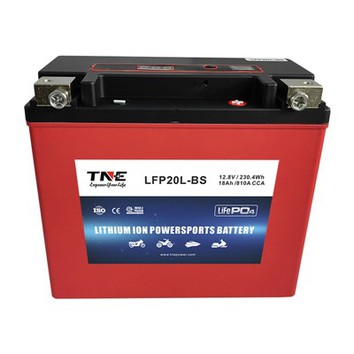
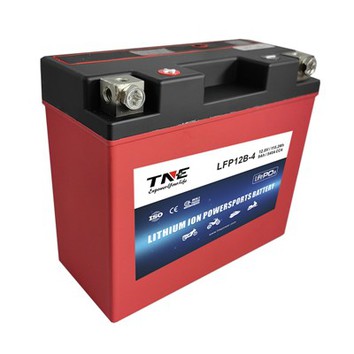
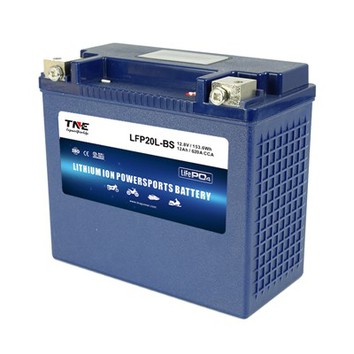
Lithium motorcycle batteries are now more affordable than ever. They are around 30% more expensive than a quality lead-acid battery but they will last twice as long, weigh about two-thirds less and have a better cranking ability than a lead-acid battery. Lithium motorcycle batteries boast loads of advantages over lead-acid motorcycle batteries. They used to be more than twice the price of a regular lead-acid battery but over the past two years prices have tumbled and they’re now comparable in cost to a quality lead-acid battery. Lithium Iron Phosphate (LiFePO4) motorcycle batteries have a power density that is 3 to 4 times higher than an equivalent lead-acid battery. That means that to delivery the same cranking capacity as a lead-acid battery, a lithium one can be 3 to 4 times lighter than the lead-acid.
Advantages of Lithium Motorcycle Battery
Increased performance and range
Lithium motorcycle batteries can provide up to 3-4 times life cycle of traditional lead-acid batteries, depending on the size of the battery pack and motor efficiency.These batteries also have a higher power output, which means that they can provide more torque and acceleration for better performance of motorbikes and their ability to reach top speeds.
Faster charging time
Another advantage of lithium motorcycle starter batteries is their fast-charging time. Lithium batteries can be charged up to four times faster. This means that riders can spend less time charging their batteries and more time on the road, the way it should be.
Longer lifespan of lithium batteries
Lithium batteries also have a longer lifespan and can last up to ten years, depending on their maintenance and usage. This is significantly longer than lead-acid batteries, which typically last approximately three to five years.
Environmental friendliness
Li-ion batteries are eco-friendly, while lead-acid batteries contain harmful chemicals and heavy metals. Lithium-ion batteries are recyclable and do not contain toxic materials, making them a greener choice.




Why Choose Us
Genuin Material & Solid Substance
Only use world top tier A grade lithium cells and automotive grade BMS.
Strict Quality control
All the cells are graded & grouped before assembly, and all battery packs are 100% passed aging test.
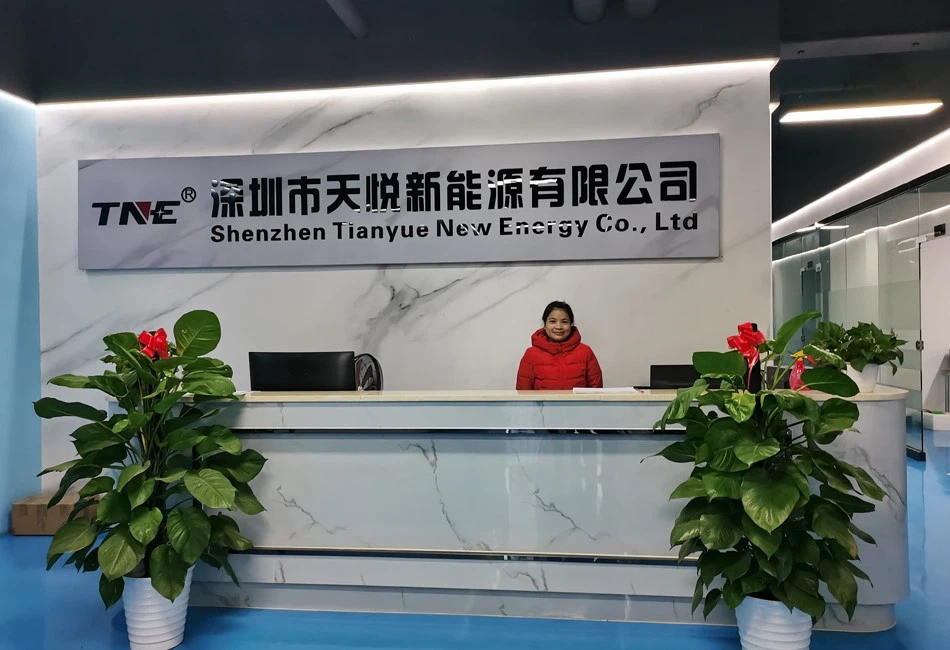
20+ Years of Deep Technology Accumulation
Our major team members have more than 20 years of experience in lithium battery industry.
Worry-Free After Sale Services
We provide worry-free after sales service and technical support for you to focus on marketing.
Our Lithium Motorcycle battery advantages

On a motorcycle, the battery is an essential and important accessory. A motorcycle battery is used for starting, ignition and lighting, which means that the motorcycle battery should have a certain capacity (to provide lighting) and also a certain high current discharge capacity (to provide starting and ignition).
The capacity of a motorcycle battery is determined by the current required by the motorcycle lighting and other electrical equipment as well as the duration. The standard is nominal in terms of rated capacity, generally expressed as a 20-hour rate, that is, a certain current a is discharged for 20 hours to reach a termination voltage of 1.75v/single cell, and the capacity discharged is the nominal capacity.
The maximum current is 10c, and the actual starting current is about 3~5c, depending on how much starting current the motor needs, and then work backwards to calculate the capacity. Therefore, it is not unusual to replace the original battery with a smaller one.
The vast majority of models on the market are still equipped with lead-acid batteries, and now is a full state of the country, the vehicle has more electronic components, which requires a higher battery, and almost all cancel the foot start, if in the field, the battery failure, will be very difficult to do.
Lithium battery motorcycle battery series, start response, rapid, lighter weight, start more powerful, and common lead-acid batteries generally shelved for three months at most six months need to replenish electricity, lithium battery motorcycle battery series, but also has intelligent hibernation function, due to the vehicle for a long time, the battery will automatically enter the hibernation protection state, no need to tedious power start, just the battery will automatically go into hibernation protection without the need for a tedious power-up.
Lithium Batteries vs Lead-acid Batteries
Choosing the appropriate sort of battery for your motorcycle might make a huge difference. Here are some key factors which make the lithium motorcycle battery stand out:
Material
Lithium and lead-acid batteries both operate on the same basis. What makes a lithium motorcycle battery stand out is the material used as a cathode, anode, and electrolyte.
Lead serves as the anode in a lead-acid battery, and lead oxide serves as the cathode. Carbon serves as the anode in a lithium-ion battery, while lithium oxide serves as the cathode.
Lead-acid batteries utilize Sulphuric acid as an electrolyte, whereas lithium batteries use lithium salt. Ions travel from the anode to the cathode through the electrolyte during discharging, and the opposite process happens when charging.
Discharge Depth
The depth of discharge refers to how much total capacity is utilized before recharging the battery. If you consume a quarter of your battery’s capacity, the depth of drain is 25%.
When you use a battery, it does not entirely drain. They instead have a suggested discharge depth of how much could be used before they need to be replenished. Lead-acid batteries must only be discharged to 50% capacity.
You face the risk of shortening their lives after that. Powersports lithium batteries, on the other hand, can withstand severe discharges of 80% or more. This simply indicates that they have a larger useful capacity.
Charge Efficiency
Because of the smart charging algorithm implemented by the BMS, lithium-ion batteries lose less energy during the charge/discharge cycle than other battery types (Battery Management System). This is especially useful when large amounts of energy are being stored (as in EVs and solar energy storage).
Price:
The one category where lead acid batteries appear to surpass lithium-ion alternatives is pricing. A lead acid battery system may cost hundreds or even thousands of dollars less than a comparable-sized lithium setup.
The average cost of a lithium iron phosphate battery with assembly can vary depending on factors such as the size of the battery, the capacity, the manufacturer, and the intended application. It is recommended to research and compare prices from multiple suppliers and manufacturers to ensure you get the best price and quality.
While lead-acid batteries often have cheaper purchase and installation prices than lithium-ion choices, the lifetime value of a lithium-ion battery balances the scales.
Energy Density
Both lead-acid batteries in the comparison above weigh roughly 125 pounds. The lithium battery weighs 192 pounds.
Although most installers can tolerate the added weight, DIYers may find the lithium batteries more difficult to install. It’s a good idea to have some assistance lifting and shifting them into place.
However, there is a cost: lithium batteries have a significantly better energy density than lead-acid batteries, allowing them to squeeze more storage capacity into less space.
For example, Brava 12V12AH lithium batteries are required to power a 5.13 kW system, but eight lead-acid batteries are required to do the same job. When the full battery bank is considered, lithium weighs less than half as much. If you are mounting an enclosure on the wall or putting it in a closet, the increased energy density allows your lithium battery bank to fit into smaller locations.
Operating Temperature Range
Because lithium batteries can operate in a wide temperature range, they are suited for usage in a variety of circumstances, including severe hot or cold temperatures.
Lead-acid batteries, in contrast, are susceptible to severe temperatures and may function poorly in these settings.
This is an important element for riders who live in places with severe temperatures since having a battery that can operate well in these situations is critical for dependable operation.
|
Lead-acid motorcycle battery |
Lithium motorcycle battery |
|
|
Cycle Life |
300-500 |
2000-3000 |
|
Self Discharge |
3% per month |
≦1% per month |
|
Battery Run Time |
1-2 years |
3-5 years |
|
Weight |
2~7kg |
1/3 weight of lead acid battery in the same capacity |
|
Safety |
√√√ |
√√ |
|
Warranty |
Shorter |
Longer |
|
Environmental Friendly |
No |
Yes |
|
Price |
Cheaper |
Higher |
Safety Precautions to Take Note of When Charging With Li-Ion Battery Charger
Avoid charging at elevated temperatures
Keep a keen eye on the lithium-ion battery's charging environment throughout the duration of the battery being charged.If the surrounding temperature exceeds 35 °c, the lithium-ion battery's power will not rise but rather drop because the present temperature is greater than the recommended charging temperature range.This means that the lithium-ion battery's time spent supplying power while completely charged will be lowered, hence decreasing battery life.
Avoid charging at an excessively low temperature
Both excessively high and depressingly low ambient temperatures are prohibited whilst charging a li-ion battery. Take note that charging a lithium-ion battery in an environment with low temperature will result in its inability to charge.
Low temperatures can degrade lithium-ion batteries, although, unlike high temperatures, the damage is temporary. The lithium-ion battery can always go back to its initial state if the temperature reaches a level that is adequate.
Do not charge with an inappropriate battery charger.
Only the specified charger should be used to recharge the lithium-ion battery.The technical specifications for lithium-ion battery chargers must be met by particular chargers since the manufacturing procedures for lithium-ion batteries and battery chargers differ significantly.
Kindly contact an authorized dealer to purchase a new charger if the previous one is missing or damaged. It is strongly discouraged to charge using lead-acid chargers or any other kind of charger.
Strictly adhere to the charging sequence
Keep an eye on the charging socket interface's insertion pattern while it is being charged.When charging, attach the outlet terminal of the li-ion battery charger inside the battery's charging port before connecting the ac power source. After charging, disconnect the power source before unplugging the battery plug.
Otherwise, reversing the sequence will likely result in electric spikes in the battery plug, which will likely destroy the charger and perhaps lead to a short circuit or explosion.
Charge your battery properly
Proper charging is critical to the longevity and performance of your electric bike battery. Always use the charger that comes with your bike, and avoid using cheap or inferior quality chargers. Also, avoid overcharging your battery. Once the battery is fully charged, unplug the charger immediately. Overcharging can cause the battery to overheat, leading to reduced performance and even a shorter lifespan.
Store your battery properly
If you plan to store your electric bike for an extended period, it's essential to store the battery correctly. The ideal storage temperature for a lithium-ion battery is between 20°c to 25°c. Store your battery in a cool, dry place, away from direct sunlight and heat sources.
Avoid deep discharge:
Deep discharge refers to discharging your battery to a very low level before recharging. This practice can cause permanent damage to your battery, reducing its lifespan and performance. Instead, recharge your battery when it's between 20% and 30% remaining charge.
Avoid extreme temperatures:
Lithium-ion batteries are sensitive to extreme temperatures. High temperatures can cause the battery to overheat and lose capacity, while low temperatures can cause the battery to discharge quickly. Avoid exposing your battery to temperatures below 0°c or above 60°c. Always go for batteries from trusted battery manufacturers.
Regularly check the battery
Regularly checking your battery's condition is essential for its optimal performance and longevity. You can use the battery's led indicator to monitor its charge level. Also, inspect the battery for any physical damage or signs of wear and tear. If you notice any damage, contact your bike's manufacturer for assistance.
Use the right charging cycle:
Lithium-ion batteries have a limited number of charging cycles. To extend your battery's lifespan, it's essential to use the right charging cycle. For example, if you're using your bike for short trips, charge your battery to only 80% capacity. This practice can reduce the battery's wear and tear and extend its lifespan.
In conclusion, proper maintenance is crucial to the longevity and performance of your electric bike battery. Always charge your battery properly, store it correctly, avoid deep discharge, avoid extreme temperatures, regularly check the battery, and use the right charging cycle. These tips will help you get the most out of your electric motorcycle lithium battery and ensure that it lasts for a long time.
FAQ
We're well-known as one of the leading lithium motorcycle battery manufacturers and suppliers in China. Please feel free to buy high quality lithium motorcycle battery made in China here from our factory. For price consultation, contact us.
lithium ion powersports battery, lithium mtorcycle starter battery, LFP12 BS 12V 8Ah 450CCA Lithium Ion Motorcycle Battery